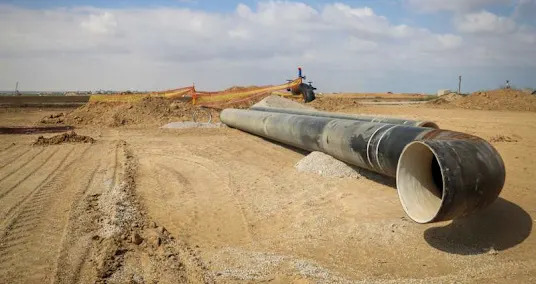
The post came in reply to a post from the United Nations Relief and Works Agency (UNRWA), saying that freshwater supplies in Gaza were "severely limited and polluted."
Gaza is receiving over 70,000 cubic meters of water per day, the Coordinator of Government Activities in the Territories (COGAT) claimed in an X/Twitter post on Sunday.
The post came in reply to a post from the United Nations Relief and Works Agency (UNRWA), saying that freshwater supplies in Gaza were "severely limited and polluted," due to a collapse in sewage infrastructure.
COGAT described UNRWA's claims as being "false narratives."
COGAT coordinates Gaza water line repair
"The facts speak for themselves," COGAT said. "When a water line issue was reported last week, we coordinated a rapid repair to restore full functionality immediately."
COGAT also said that there were four active pipelines leading into Gaza: Nahal Oz, Bani Suheila, Birkat Sa'id, and the Emirati line.
"While local groundwater faces challenges, we continue to repair infrastructure, even during combat, to ensure civilians access to safe, potable water," COGAT claimed.
LATEST POSTS
- 1
 Wizz CEO: We’re going to invest $1 b. in Israeli market
 - 2Is Trump going to war with Venezuela?
- 3Does physics say that free will doesn't exist?
- 4Golan resident convicted of spying for Iran after passing tank movement, missile-impact data
- 5Jasmine Crockett in, Colin Allred out: A major shakeup for Democrats in their quest to finally win a Senate seat in Texas




- Airport wait times won't return to normal until Congress reaches a deal to pay TSA. Here's why they still can't come to an agreement.
- Hamas set to elect new terror leader with Hayya, Mashaal in pole position
- Figure out how to Guarantee Your Dental Embeds Endure forever
- Well known Tea Brands for Each Tea Sweetheart
- The next frontier in space is closer than you think – welcome to the world of very low Earth orbit satellites
- Christopher Nolan's 'The Odyssey' trailer: See Anne Hathaway, Matt Damon and Tom Holland in 1st look at movie
- Trump administration launches new immigration crackdowns in New Orleans and Minneapolis. Here are all the cities it has targeted so far.
- Concern for couple jailed in Tehran as British embassy closes
- Top Frozen yogurt Flavor: Cast Your Vote!