CAPE CANAVERAL, Fla. (AP) — After weeks of fuel leaks and other issues, NASA faced a trouble-free countdown Tuesday on the eve of astronauts' first trip to the moon in more than half a century.
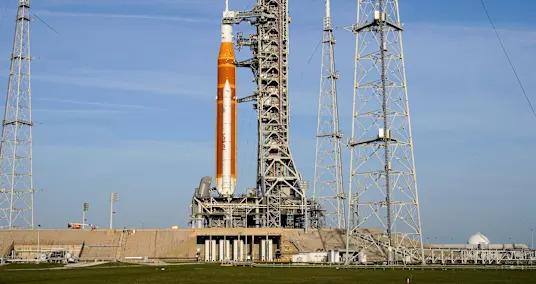
Officials reported the moon rocket was doing well on the pad, and the weather looked promising. Forecasters put the odds of favorable conditions at 80%.
“Everybody's pretty excited and understands the significance of this launch,” said senior test director Jeff Spaulding.
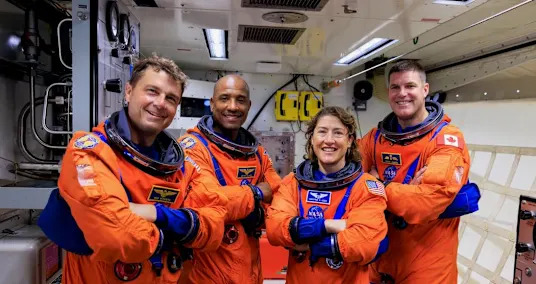
The four astronauts assigned to the Artemis II mission will become the first lunar visitors since Apollo 17 in 1972. They’ll zip around the moon without landing or even orbiting, and come straight back.
It's the closest NASA has come to launching Artemis II. Hydrogen fuel leaks bumped the flight from February to March, then clogged helium lines pushed it to April. The space agency has only a handful of days every month to send the three Americans and one Canadian to the moon.
Confident that all of these problems are fixed, the launch team plans to begin fueling the 32-story Space Launch System rocket on Wednesday morning for an evening send-off.
___
The Associated Press Health and Science Department receives support from the Howard Hughes Medical Institute’s Department of Science Education and the Robert Wood Johnson Foundation. The AP is solely responsible for all content.
LATEST POSTS
- 1
 How did life begin on Earth? New experiments support 'RNA world' hypothesis
 - 2Andrew McCarthy's awe-inspiring image of a skydiver in front of the sun
- 3Drones haven't won the fight in Ukraine. That matters as the West learns new ways of war.
- 4Manual for Wonderful Getaway destination
- 5Partake in the Outside: Senior-Accommodating Exercises for 2024




- Mating injuries may lead scientists to identify dinosaurs’ sex
- Poll: Most are satisfied with their health insurance, but a quarter report denials or delays
- Cannabis reclassification could 'open the floodgates' for research, scientists say
- Finding Ideal Date Spots for Two or three Encounters
- Rocket Lab launches mystery satellite for 'confidential commercial customer' (video)
- 6 Top of the line Lodgings All over The Planet, Which One Do You Concur With
- From ‘Project Hail Mary’ to Artemis II, spaceflight captures audiences when it centers on people because human space travel is hazardous
- Vote In favor of Your Favored Web-based Venture Stage
- Opening Your True capacity: 12 Techniques for Personal growth